“46%” THC Flower
I Bought Some So You Don’t Have To.

Over the past six months I’ve been working with several labs to try to explore what is going on with THC potency testing in the state of Oregon, and I’ve written a series of articles about it.
Yesterday, on Leafly, I saw some flower advertised as 44% THC that was selling at $5 a gram. I’m sure you know what happened next — I had to buy it.
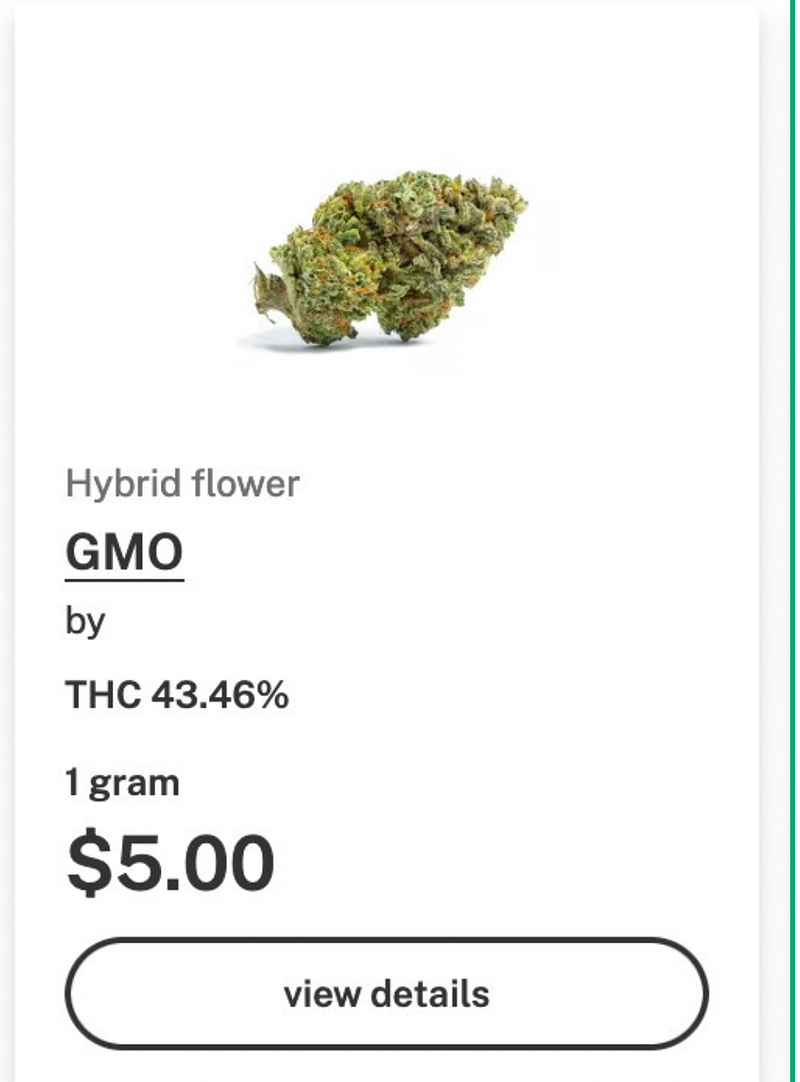
The fact that flower with such a high percentage is selling for $5 a gram tells me that there’s something wrong with the lab result on it. It also means that the retailer didn’t carefully examine the cannabis or its paperwork on intake, or doesn’t have procedures to do so.
43% is unreal. High testing, high quality kief is around 51%.
And the fact it’s priced so low when THC is supposedly so prized? Says a lot!
Bonus — it’s not even a picture of the cannabis itself — that’s Leafly’s ‘default weed’ picture.
Obviously, when I saw this yesterday, I knew I had to get this flower. Especially when I called the shop and the budtender ‘didn’t know’ who tested it.
I had to know. I had to know for myself who tested it and what I thought of it.
The Label and Package
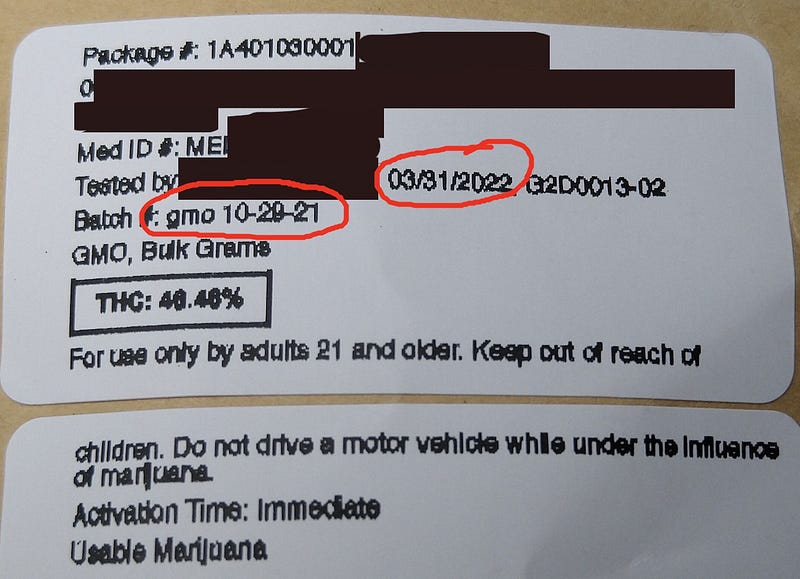
The label brings more questions than it answers.
What regulatory system wouldn’t trigger an audit on a result like this?
Why is this in Leafly as 43%? It’s listed in METRC as 46%!?
There’s no Harvest Date listed which the rule stipulates there should be, so the dispensary that doesn’t check percentages too well also doesn’t check their labeling. Has this retailer never had their labels checked?
We can derive from the Batch Number that the Harvest Date is 10/29/2021.
But the cannabis wasn’t tested until 3/31/2022.
What kind of a grower would grow a cannabis that they thought would break 30% , but not get it tested until five months later? These growers would have been straining everything to get this result: why wait so long to test it that it might sacrifice some of that potency?
What Does This “46% Weed” Look Like?
Here it is with some magnification to try and find some trichomes. See how many fully formed trichomes you can find!
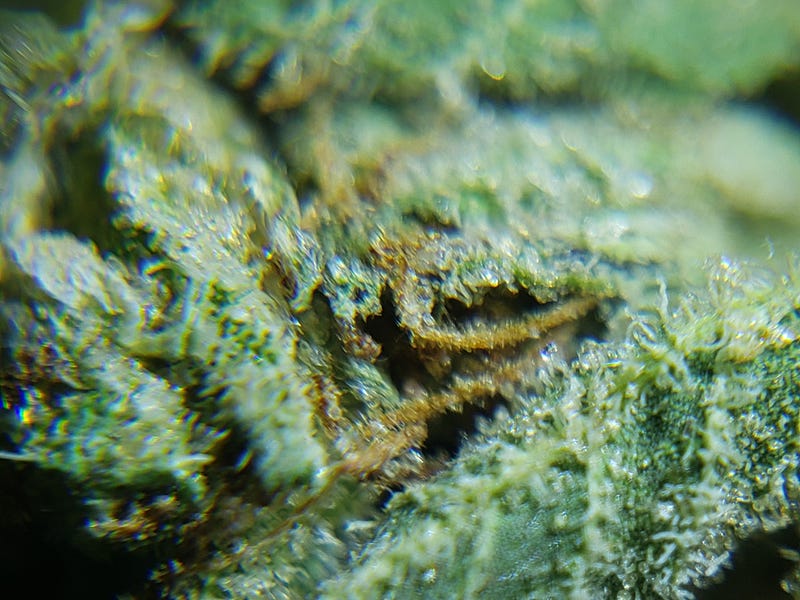
As you can see to call this bud visually underwhelming is an understatement.
It’s a GMO, but its nose is off, with far more garlic than any skunk or chem at all. The flavor of the vapor at lower temperatures is very garlicky, and at higher temperatures it takes on more green tones. Overall the terpenes and flavor are exhausted relatively quickly.
Effect-wise, it’s an overall underwhelming experience if you are looking for 46%, but if you are satisfied with a nice body high that probably tests around 20%, this isn’t too bad.
The Verdict?
There’s literally no reason to need to lie about this cannabis.
The fact they lied about it makes it the worst. I worry with every pull that they might have lied about pesticides or mold.
It’s not the greatest, but it didn’t have to be the worst, and somewhere there’s a stoner that would love it.
In other words, it would taste better if it wasn’t made of lies.
Why doesn’t the farmer value their consumer enough not to lie? Surely the farmer knew that 46% isn’t realistic when they got the result back.
Why did the lab director sign off on this result? Who would put their scientific credentials on the line for a result like that?
Why don’t results like this trigger audits at the state level in the seed to sale system, if not real-time: a monthly report could have caught this already.
Why would a dispensary buy this and sell it to their clients?
I’ll work with a lab to get this tested and will keep you updated, but I’m pretty certain this cannabis isn’t 46%, and it’s a great illustration of the stories I’ve been writing.
Be careful out there!
What’s the most ridiculous lab result you’ve ever seen? Let me know in the comments!
Update: A lab friend tested the cannabis at 30%. Unfortunately, results like this are not the sort of smoking gun that regulators need, as bad actor labs could claim that the THC degraded over time while on the retail shelf.
Stay tuned!