What is the Matter With Me, And How Medical Cannabis Helps
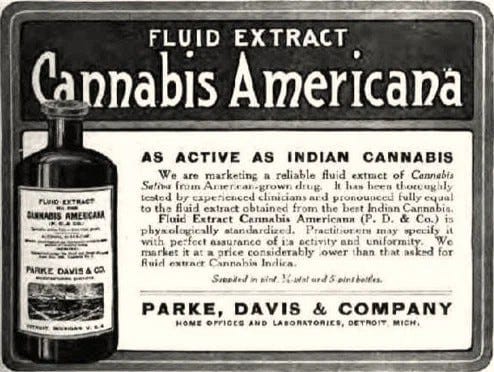
Picture Unrelated.
Before we go on. I’m not a doctor. I’m not giving you medical advice. This is not medical advice in any way shape, or form.
This is the introduction to a series I’m going to be writing about why I use medical cannabis. That means we’re going to have to talk about some of my medical issues. And some of them come with trigger warnings. I’m going to be discussing situations that involve domestic violence and abuse (physical, mental, and sexual). I am not going to shy away from explaining some of the issues that I’m dealing with (and how cannabis helps me to deal with them).
If you’re not up for reading it, bow out now. I’ll put in a picture of something wholesome right here to stop you.
Complex PTSD
I think this diagnosis and what caused it are important medical events to understand. The difference between Complex PTSD and PTSD are the lenght of time of the trauma. In my case, my Complex PTSD is from ongoing psychological, physical, and sexual trauma — and then from hiding it / being in denial about its impacts on me it until my late 20’s. It wasn’t a single traumatic event — but many, with no time where I could feel safe enough to process what was happening.
I want to be clear — I don’t want to blame it all on childhood, but it’s foolish not to acknowledge that the seeds of what eventually grew into a host of issues started there. I haven’t always been the most capable or adept at dealing with those issues, and that is on me. But, in my defense, there are plenty of studies on epigenetics, and I can tell you I’m a perfect 10 on the ACE if you get my drift.
If you are working through your trauma, you’ve inevitably encountered “The Body Keeps The Score”, and my body has kept rigorous score, often in very tangible ways — vision loss is very easy to notice. I’m reminded every day of how, in one catastrophic event, my vision was altered and I was abandoned by my mother in a situation that could have killed me in order to save herself.
This post isn’t about all my psychological traumas! In fact, I’ve found C-PTSD is less about what happened to me — and more about what IS happening to me. It’s about healing from not just the trauma, but the habits that I formed in trying to survive it.
Cannabis helps me take a mental and emotional step back from the sense of emotional dysregulation that I get from my PTSD being triggered. Because I lived in a state of constantly feeling unsafe for as long as I did, unhealthy behaviors and coping mechanisms — especially when it comes to negative self-talk — became my daily habits. I’ve noticed when I can have a really fruity, aromatic strain of cannabis — one loaded with a ton of terpenes (the ones that require that perfect cure I’m always on about) helps give me something else to focus on, and strains with high myrcene help ground me and soothe the ‘mind bees’ that the inner critic likes to unleash on me. I have a theory that terpenes are particularly key for my PTSD, as the wrong profile can send me into dysregulation and even disassociation. It downgrades my periods of severe depression. It doesn’t prevent depression, but it does make the darks less dark.
Ocular Effects from severe head trauma.
Specifically I now have a fully mature juvenile cataract in my left eye. It could be fixed over several surgeries that aren’t covered by insurance. My right eye (‘the good one) is severely myopic. I’m not exactly a somewhatcyclops — I’m barely even a cyclops! That guy for sure could see better than I can! The issue is, with my vision being severely myopic in my remaining eye — and with one eye to do the load of work — it gets tired quickly, and when it gets tired the vision starts to warp from me squinting / trying to make do.
I’ve found that cannabis heavy in myrcene helps me feel like the muscles around my eye are more relaxed, and I can spend more time getting my writing done than when I don’t have access to it or am on a break. Because I often have to wear readers over my contact prescription, getting some relief from the feeling of ocular strain is important to existing.
Neurological Impacts
This is sort of the area unexplored because when I had the kind of coverage that it would take to get all of the scans I wasn’t interested in digging into my head trauma — and now that I don’t have access to that kind of coverage it doesn’t really matter anyway. I don’t know that knowing every little thing would help. If I can’t have coverage to fix my vision which is already diagnosed and solvable I can’t imagine handing them a complex and extremely solution-averse problem.
Here’s what i know — I definitely had some instances involving severe head trauma. I was definitely born addicted to at least heroin if not more. I took it all like a champ, I guess, because 3 year old me took a beating so bad it took 13 stitches to put my head back together and didn’t die.
But let me tell you — survival isn’t just about the binary of life or death.
When my ocular issues combine with my neurological ones, I can get headaches. I used to call them worldeaters because I wouldn’t be able to see, I couldn’t stand to listen to anything, and all I could do is curl up in a ball and hope that I didn’t have to feel anything. Nothing touching me. No breeze. No air on my skin — it all felt SO LOUD. These headaches ate my world — and I have them far, far less frequently when I am on cannabis. I used to get them 3–4 times a week, and now I have them 3–4 times A YEAR.
Unlike a lot of other of my symptoms, strains high in caryophyllene tend to help in addition to those with myrcene. I’ve also found that if I can get to some cannabis with terpinolene during the aura phase, I have a less motion-sick migraine.
My Horrible Guts
I had an emergency appendectomy I almost didn’t get in time when I was 14 (hilariously it was held up due to some misspellings and other errors in the paperwork!), my gall bladder came out at 16. I have Celiac disease, which went undiagnosed until my late 20’s (but, unknownst to me, was triggered by that appendectomy). I can definitely, also, admit to some disordered eating and found it hard to deal with having to eat food on more than one occasion. Cannabis, of course, is well-known for its impacts on appetite. But it also helped some of the more subtle symptoms after I had been glutened (and some of the not-so subtle ones). Once again, caryophyllene has been common in the strains that gave me relief from the gut pain.
Bones? Joints?
Well, I took a lot of beatings as a kid and probably earned a bad back either from that or from my stint marathoning, and years of poor posture in font of a computer. I have a knee that’s been bad since I took a bad tumble. I have scoliosis. My back was so bad I took up sewing corsets to help stabilize it while I tried to deal with it.
Strains high in myrcene, limonene, and ocimene have helped when I’ve been dealing with bone and joint pain.
That is a lot, and we’ve really just skimmed the surface of the data my journals have on my experience with medical cannabis. What I’ll be doing over the next few months is going over the literature I can find about how medical cannabis could possibly be helping me, and if there is any direction or information on what kind of cannabis could help with which symptoms, beyond what we’ve explored together about terpenes. If there is anything you’ve had experience with, or are interested in, or want to contribute — let me know!
I could not think of a better day to kick off a long-term project about the importance of medical cannabis than on 4/20.