8 Cannabis Laboratories Tested the Same 4 Samples
Oregon’s Lab Testing Issues Revealed in Experiment
Since it was marketed to cannabis consumers as an important metric for the cannabis experience, THC content for flower has dominated the cannabis space. States re-enforced this notion during legalization by emphasizing THC on labels and regulating cannabis and hemp via THC / Delta 9 content. Now both the cannabis industry and industry regulators are blaming consumers for the resulting corruption of the THC metric as farmers seek to find the highest number possible for their flower, and some labs seek to find ways to make sure they get it.
That’s right, they blame us.
Now, to be fair, we all know it’s the rogue bad actor labs, farmers, and dispensaries that knowingly engage in this behavior.
But just to prove a point I’m dedicated to becoming the sort of consumer who transcends this unfair categorization.
A few months ago, I wrote up information I gleaned from a 250,000 record set from the state of every THC test performed on consumer cannabis. For many in the industry, this information wasn’t convincing enough. These folks explained explained to me about how such data wasn’t ‘up to date’ enough, or had inconsistencies built in, and assured me the only way to be certain was to get every lab to test the same sample (and of course I had people espousing the opposite view as well).
THC & the Corruption of a Metric
A metric is a way to measure a thing. When using a metric, it’s important to always keep in mind how a metric is measured, and who is measuring it (in other words, data about the metric, or ‘metadata’ if you will).
I’ll give you a for-instance. When I use a tape measure when sewing, I never use the first inch. It’s often wrong. I measure from 2 onwards. Why? Because measuring tapes warp, especially that first inch. You can use this same idea for other ways of measuring things — including cannabis labs. To extend the metaphor: the ones at the extreme end of the tape are warped.
It’s not just about the measuring itself. It’s also about economic pressure. Not just a little — a lot. More than once I was told that a lab lost a significant client because they were not ‘producing the right numbers.’ It’s not just for higher numbers, either — in the case of hemp, delta-8, and other cannabinoids — they are looking to DEFLATE it as well. This has caused disastrous results.
When I talk about ‘Corruption of the THC metric’ I’m talking about anything that would make the THC metric more difficult to measure. The more i learn about how potency is or isn’t regulated, the more I’m convinced that right now, THC is very bad for the cannabis industry.
The Round Robin: The Setup
The ‘round robin test’ was my first effort at trying to understand what was going on. I wanted to send some samples to the labs to see what they reported. Tests like this are performed and are called proficiency tests, but several labs confided issues they had with how some of the current proficiency tests are run (such as not using cannabis, but a THC-spiked hemp sample).
I used the public-facing information on OLCC’s website about contact information for all of the accredited labs. I then started calling and emailing the numbers associated with their registration. Initially, 20 labs agreed to test, and I was over the moon.
Then, of course — reality set in the form of huge budgetary constraints. I talked with my state representative, who agreed that due to what I was doing, crowdfunding, etc. was off the table and he said the only legal way to approach funding was to seek it from the industry itself, unless I could self-fund. I don’t make a lot of money, and the project was going to cost thousands in various expenses — self-funding was out.
That’s when a lab stepped in to help, and another offered as well. Most labs agreed to waive their testing costs, but it would cost the experiment its ‘blind’ nature (when dropping off the samples, the labs now knew it was related to my project).
Once all of that happened, and I re-contacted labs to gauge their interest, given how everything had changed. A lot of them dropped out or ghosted me. There were even some that received a sample and didn’t participate. Crazy, huh?
In the end, I have results from 8 performed on the same 4 samples of material. And I’d say that the data is pretty interesting.
8 Labs, 4 Samples
Sample A, B, and C were all flower. Sample A is some of the craziest flower I’ve ever EVER experienced, and I’ve actually written about it before. I even had a lab ask if it was a kiefed batch: that’s how nuts flower A is.
Sample D was a distillate.
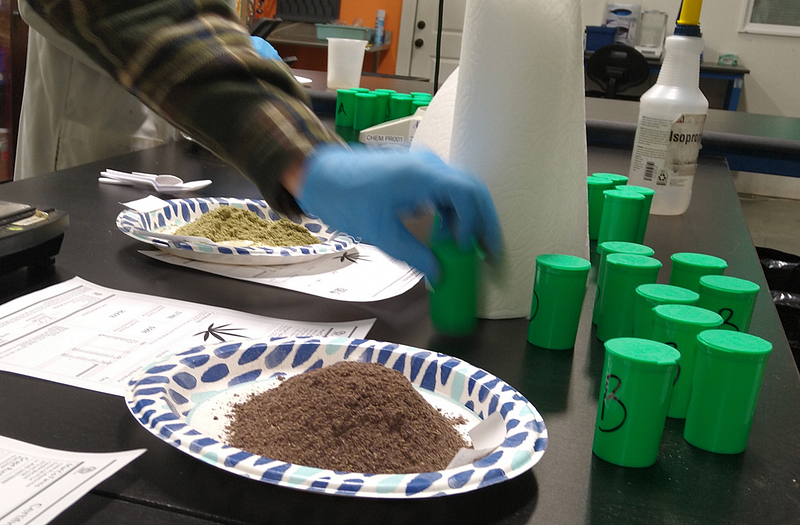
For all of these samples, I had them homogenized at ChemHistory. Originally I was going to try and build my own homogenizer using some instructions from one of the labs that said they were going to participate — but once they dropped out, I felt free to just ask for some help on this one!
Homogenization is a very important process for cannabis testing. It’s how a lab ensures that any sample is representative. This is pretty complicated for a plant like cannabis, since potency can be higher in one portion of the plant vs. another. Essentially, everything is ground into tiny bits, and those particles mixed up so much that it can be trusted to be representative of the entirety.
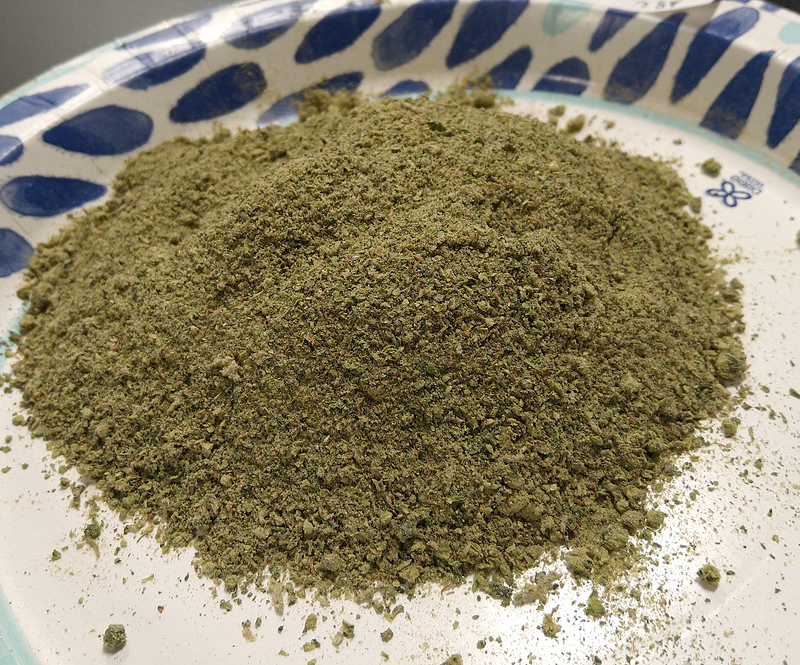
One of our homogenized samples looked like this:
Results
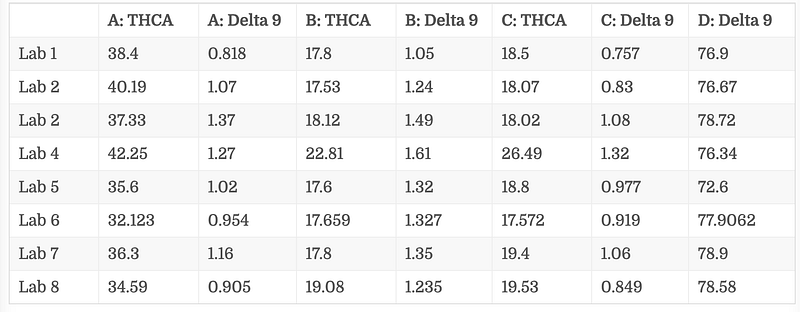
Why didn’t I include THC? Because Total THC is a calculated value, and can be derived from Delta-9 + (THCA*.877).
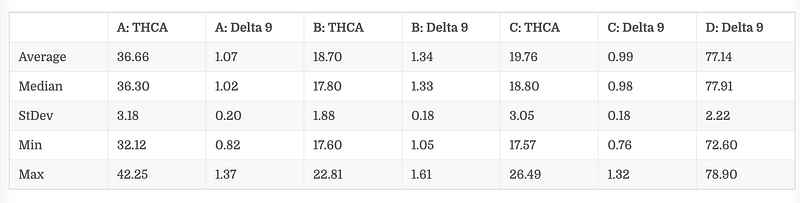
Summary Information:
What Next?
You’ll notice that I don’t make any conclusions or real observations about the data I’m reporting. Over the next couple of weeks I’ll be seeking industry experts in statistics, laboratory science, cannabis lab science, etc. to help make sense of the data.
You deserve to know what’s in your cannabis, and if it’s safe.
Other Resources:
How Fraud is Proliferating in the Cannabis Testing Market
Originally published at https://oregoncannabisgazette.com.