Adventures with My Antique Treadle Sewing Machine
My Singer 15–88 is My Favorite Thing.
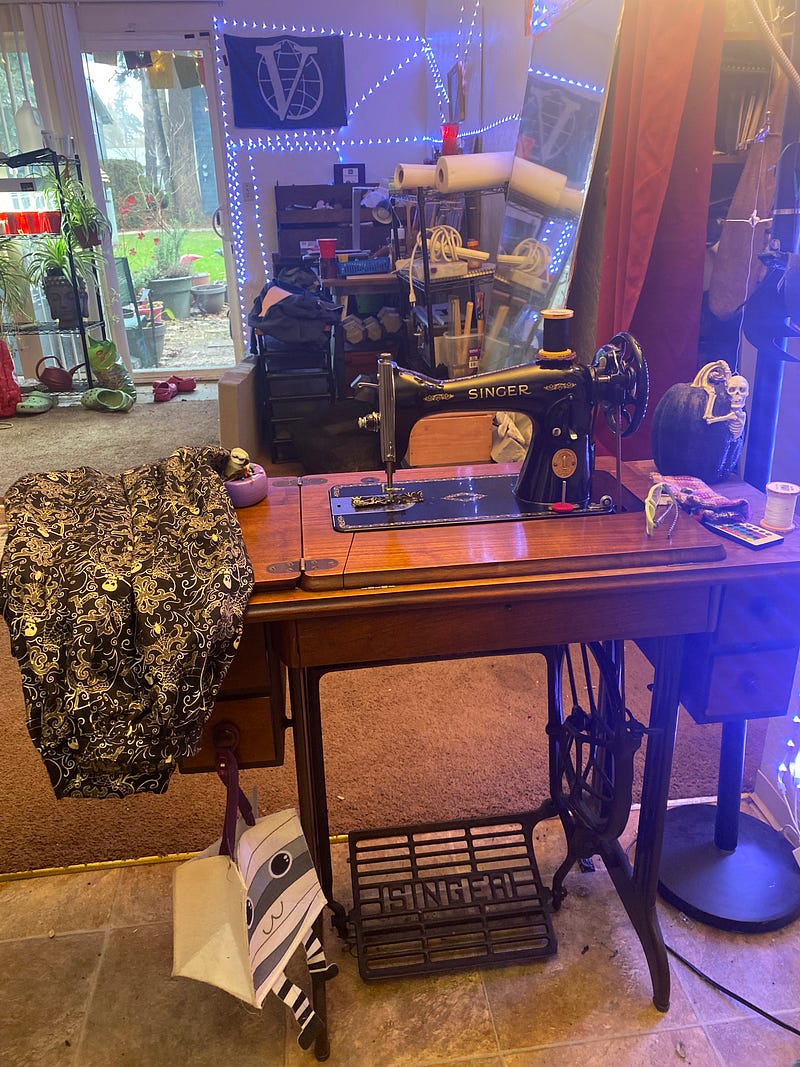
Last June, I bought an antique Singer 15–88 at an estate sale, and wrote about the process of investigating exactly what model she was and what the attachments were that came with her. Perhaps it was my genuine love of the machine that made it one of my most popular stories of the year! We’ve come a long way since then.
The Projects
I’ve actually been sewing quite a bit since I got Maggie, but I sew in a lot of cases for more utilitarian purposes, so I don’t always have pictures of what I make (or the processes I used even!).
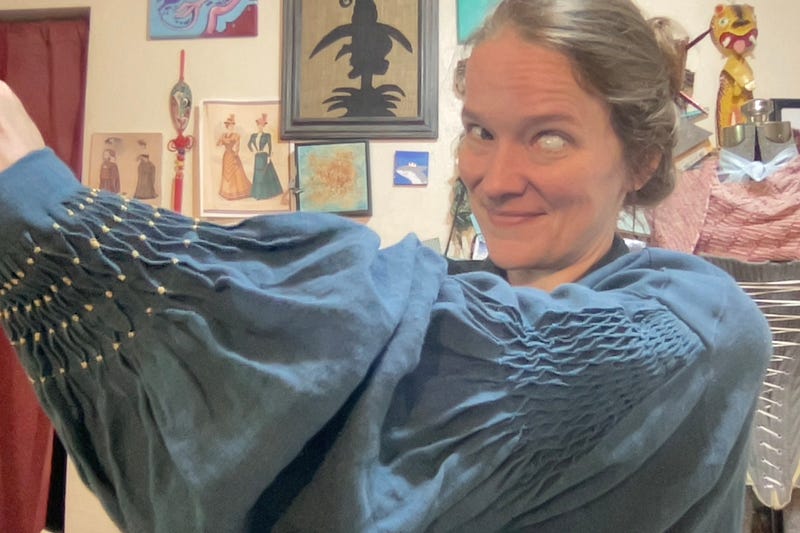
One of the first projects I finished on the antique machine was sewing together the linen shirt I had hand smocked. I really love this shirt for the extra dramatic sleeves!
I also got inspired by a citrusy request for an apron
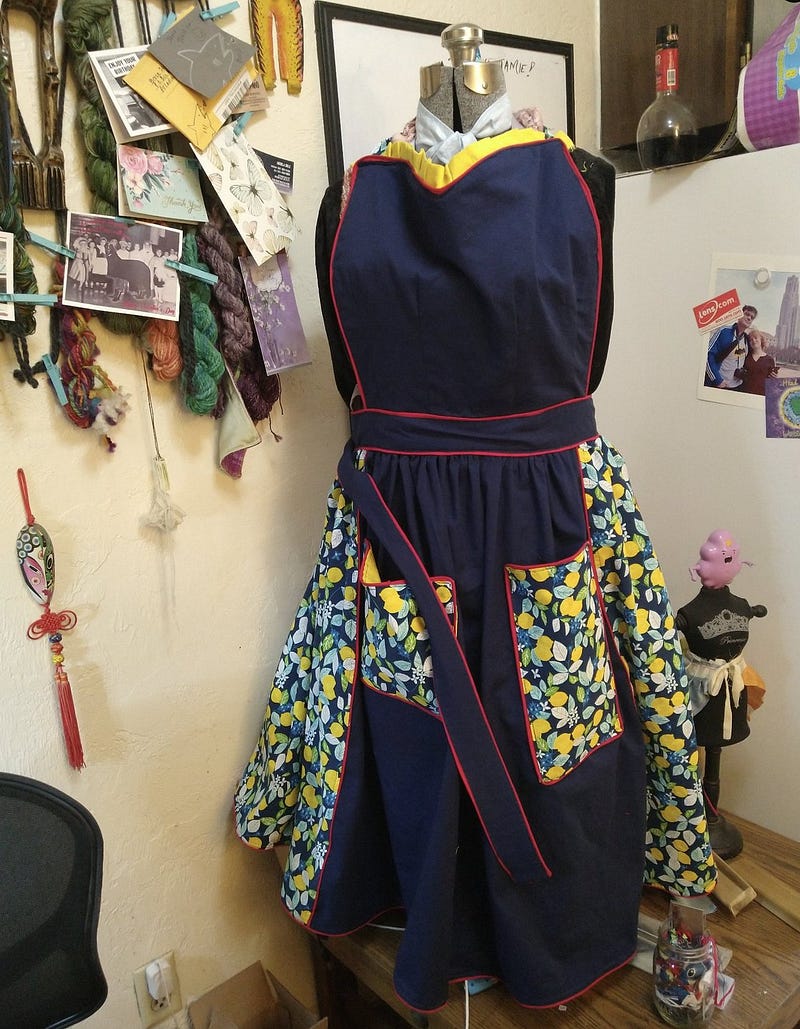
This apron came entirely from an idea in my head, and even managed to fit her exactly as I hoped it would. Even though I wanted to change 1000 things about the way I constructed it, I’m really proud of how it turned out.
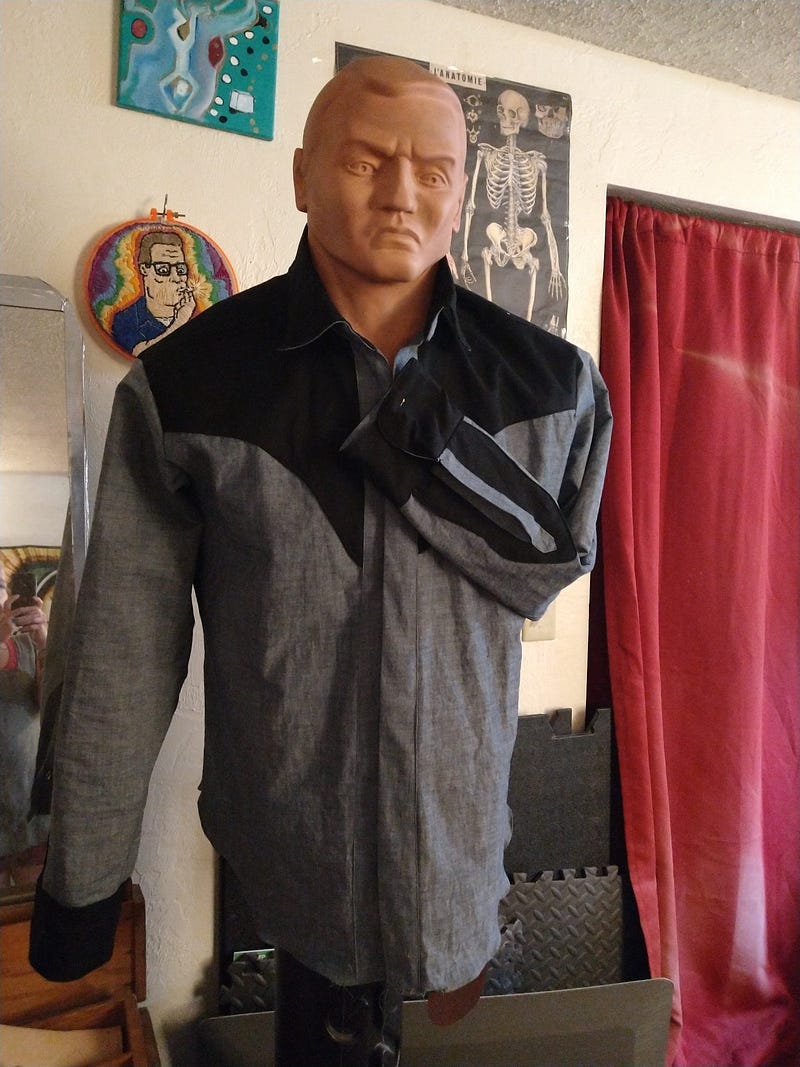
Apparently I was really captivated by piping, because I made a couple of shirts for Darren that centered piping. He has a deep love of cowboy-yoked shirts. In one of the few instances where I bought a pattern, I picked up the wonderful Folkwear Five Frontier Shirts, and scaled up the largest size.
After making a toile (and remaking around 6 different patterns for the sleeves), I made him a shirt in chambray and black broadcloth with black pearl snaps to make sure everything fit.
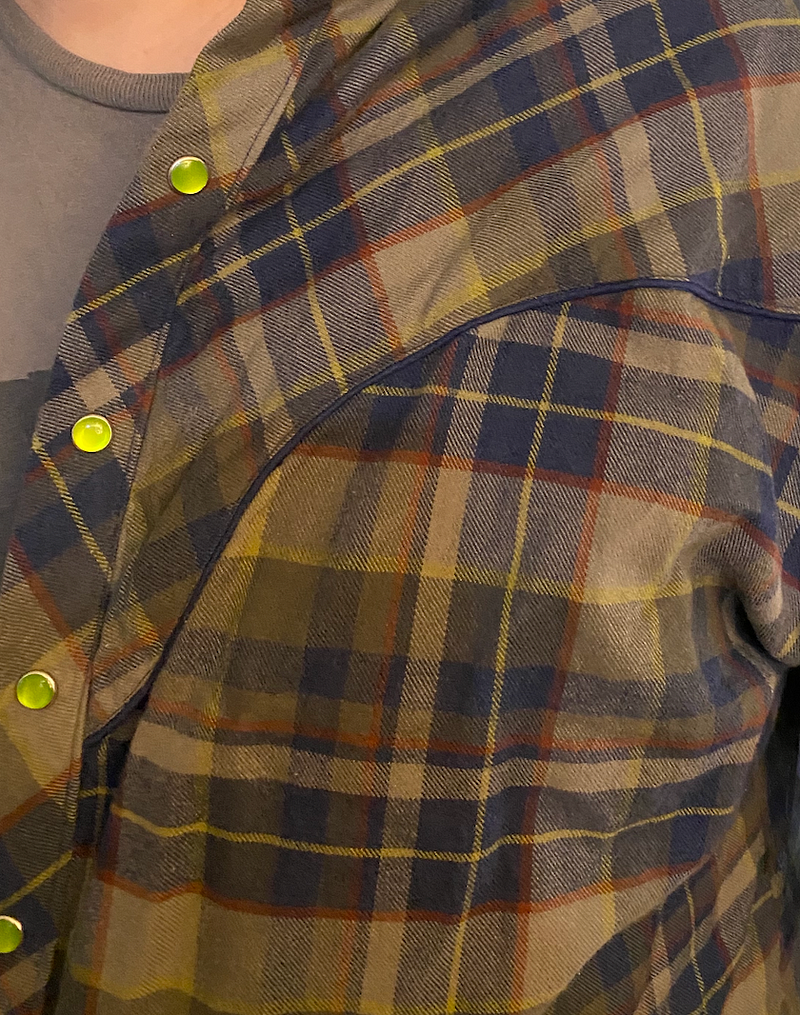
Once I was sure I had the hang of it, I decided to use some lovely flannel I picked up on sale and make him another version of the shirt. The best part about the flannel is it matched these great lime green snaps I bought when I grabbed the pattern.
I always find it interesting how different a piece can look depending on the sort of fabric and notions that are used to make it. This shirt has a completely different feel, even though it uses the same shapes.
Of course, I couldn’t resist sewing my dream outfit — a late Victorian-inspired vest and skirt combo. I used some velvet that I thrifted and buttons that I’ve carried for at least three moves, and finished my dream ensemble.

Those Victorians really knew how to dress, right?
Of course, I knew I had to sew a corset using a machine that was essentially built for such tasks. This project also meant I also got to use my Victorian sewing bird a bit to help hold the corset while I put some lace on it.
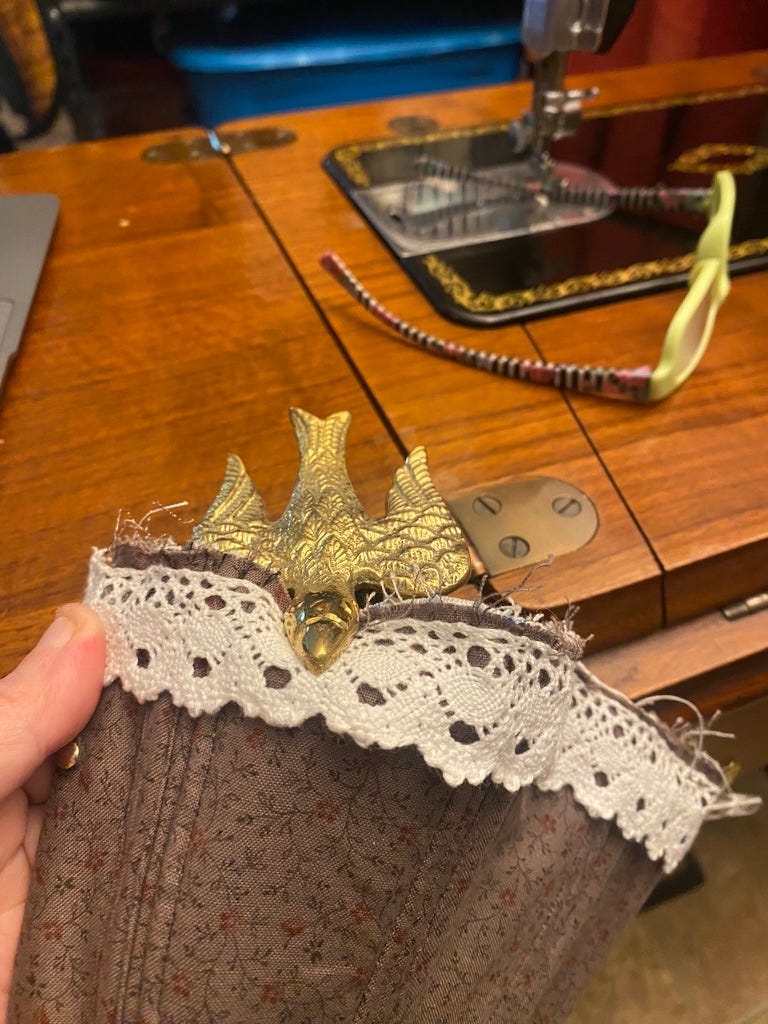
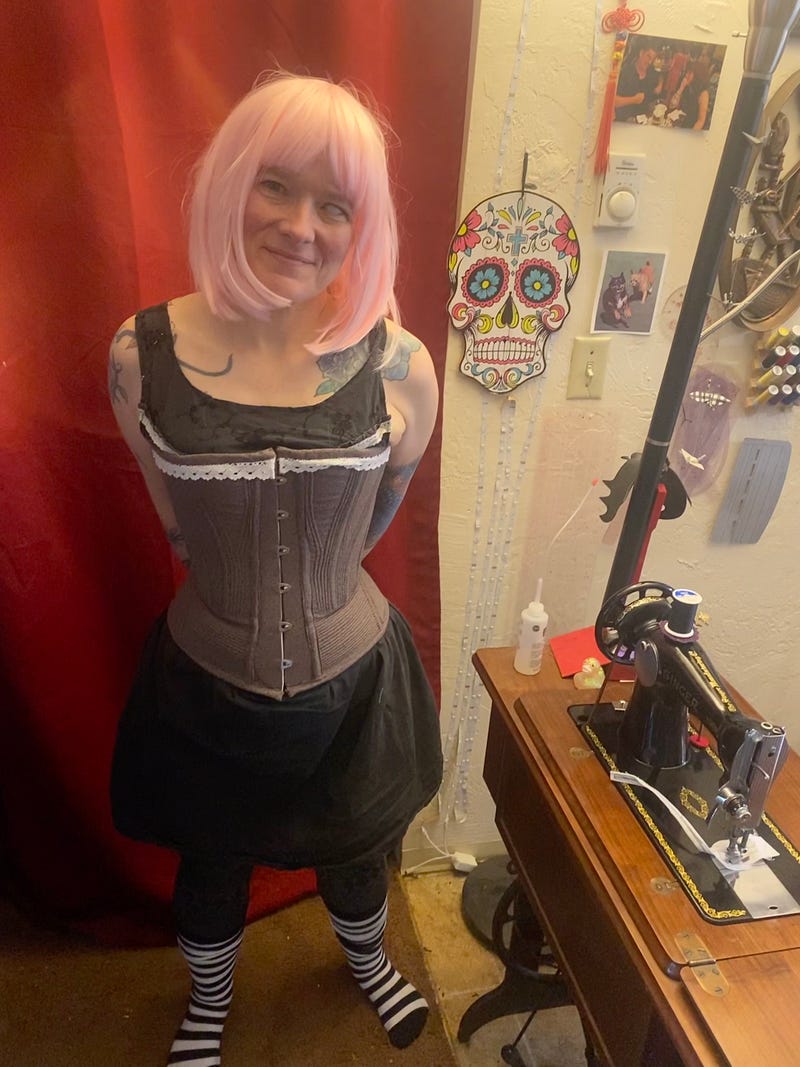
There were a couple of challenges with this corset that were entirely of my own invention. It has three layers: coutil, a light canvas layer, and then the fashion fabric layer of cotton. The bones are all stainless steel bones, except for those around the lacing, which are 1/4 sprung steel. I used pink ribbon for lacing because it just looks adorable.
The Maintenance
With all of these big projects and all of the tiny projects and mending between, I made sure to maintain her often. With Maggie it’s an absolute delight. The advantage to having such a powerful machine made to be deployed to housewives for the duration — these are made for home maintenance!
One of the things that might come as a surprise to those who use modern machine is just how oil hungry a vintage machine can be. Not only do all of the moving parts have to be oiled (and on days where the machine is used a lot, it’s best to even oil once a day!), but oil is also the best way to clean the machine without hurting the decals or the enamel.
The machine’s manual shows where all of the oil needs to go with handy diagrams. Machines at the time were made to be serviced by those using them, and the manuals are key to understanding how to use and maintain them!
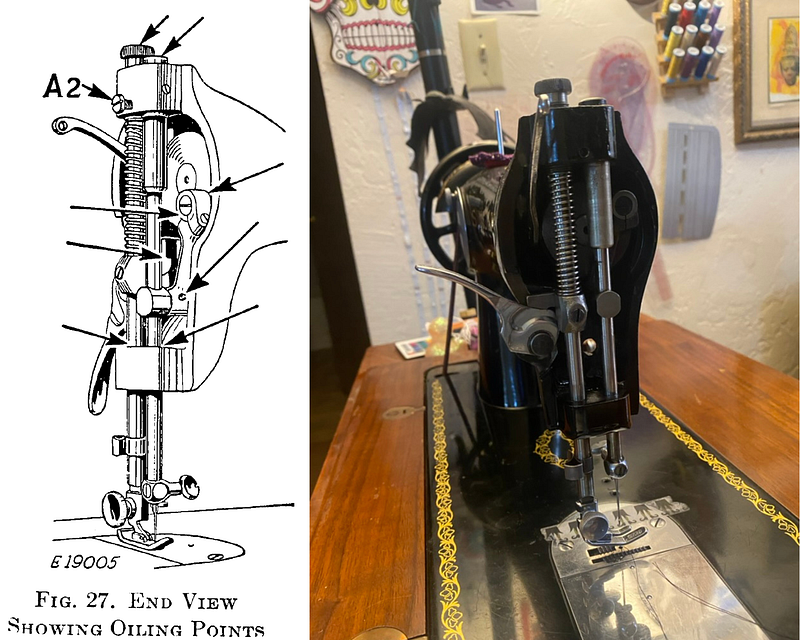
If there was extra, old oil build up that looked brown, I very, very carefully used rubbing alcohol to wipe it off. I have to be sure not to allow the rubbing alcohol to touch the enamel or the decals, though! I’d rather use kerosene, but I don’t have any on hand (it’s what the manual recommends!)
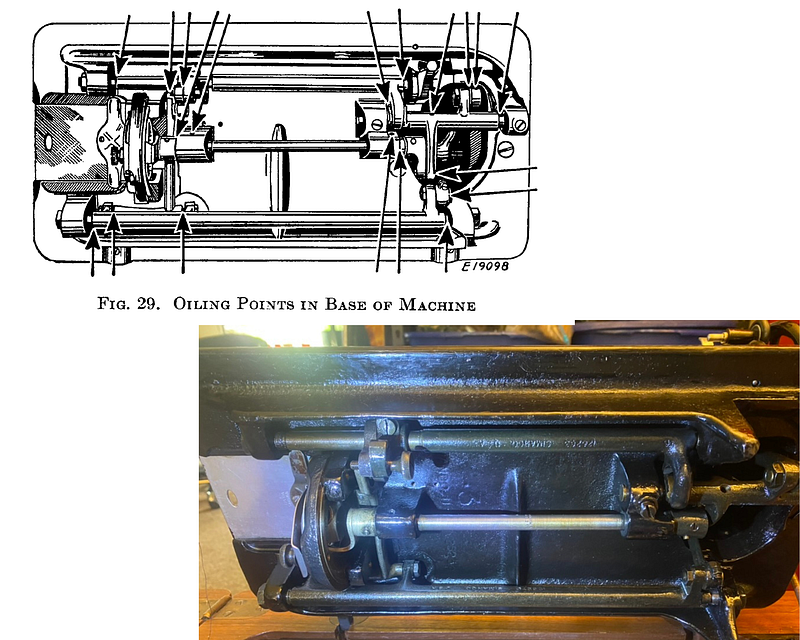
With maintenance and oiling, Maggie runs nearly silently, and I can turn the balance wheel with my pinky there’s so little friction. It’s a very different experience from sewing on a modern machine.
The Love
There are a lot of advantages to modern machines, especially when you get into machines like sergers and overlockers, but I don’t have the special feeling I get like I do with Maggie. Perhaps it’s because some other iteration of me spent hours at a similar machine. Maybe there’s a type of pride or confidence that comes from being able to care for and maintain such a wonderful machine myself.
Regardless of the reason, my deep love of caring for my Singer 15–88 in addition to sewing with it gives me a confidence and a deeper understanding of it.
Next Time:
The New (To Me) Attachments like The Buttonholer, the Zig Zag, and the Blind Stitch Attachment — how to Find Them, Troubleshoot and Use Them! Be sure to get an email when I publish so you won’t miss it! If you’re interested in reading more than three articles a month on Medium (and supporting me via a commission!) sign up for a subscription using this link!