Get to Know a Cannabis Terpene: Caryophyllene
Beta-caryophyllene (BCP or caryophyllene) is a powerful terpene that can also act as an agonist on the CB2 receptor like a cannabinoid.
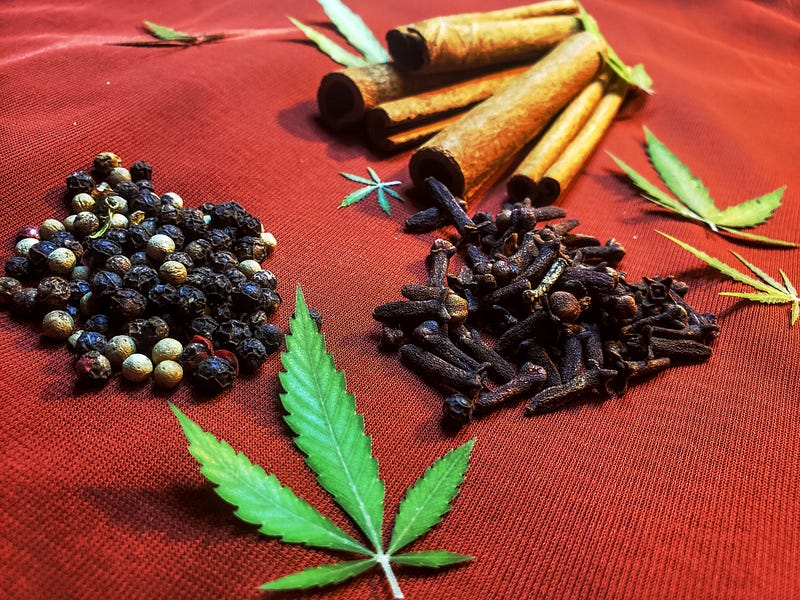
Beta-caryophyllene (BCP or caryophyllene) is the terpene that gives certain strains of cannabis that spicy smell. It’s also found in spices like cinnamon, pepper, and cloves. Because it interacts with the endocannabinoid system’s CB2 receptor like a cannabinoid (THC, CBD, etc.), it also has some exciting medicinal potential. This has also made some researchers argue for its inclusion as a cannabinoid. Common in both cannabis and nature, this terpene is also an FDA-approved food additive. It was also the first cannabinoid classified as a dietary cannabinoid!
With this vast array of uses and US government approval to use beta-caryophyllene in food, beta-caryophyllene is in thousands of patent applications. It’s included in applications for products that include CBD, melatonin, and beta-caryophyllene to promote sleep, it is included in topical applications to clear up acne. Because of its flavor it’s included in a stevia sweetener patent that includes taste profile modifiers.
The many uses of beta-caryophyllene are also standing up to the rigors of science. Its ability to interact with the CB2 receptor has made it a focus of many different studies across several disciplines. The CB2 receptor is the peripheral receptor of the endocannabinoid system in the body, and it is believed that it helps regulate immune-signaling and inflammatory responses within the body.
Caryophyllene had a positive impact on
It was found to have beneficial effects on diabetic rats’ ability to reach glucose homeostasis.
Beta-caryophyllene is exciting — not only does it have the medicinal, aroma, and flavor possibilities of other terpenes, but it also has that amazing ability to interact directly with the CB2 receptor. To find strains that are high in caryophyllene, it’s important that you work with farms and dispensaries that provide full lab test results so you know exactly what you are consuming. You can often find caryophyllene in strains like Bubba Kush, ChemDawg, Sour Diesel, and strains that come from these lineages.
Boiling Point: 264 to 266 °F
Other Sources: Cloves, cinnamon, black pepper, basil.
Scents: Spicy, sweet, cloves, dry, powdery
Flavors: Woody, spicy,
Article Sources:
http://www.thegoodscentscompany.com/search3.php?qName=caryophyllene&submit.x=0&submit.y=0
https://terpenesandtesting.com/beta-caryophyllene-is-a-dietary-cannabinoid/
https://www.sciencedirect.com/topics/medicine-and-dentistry/caryophyllene
https://www.sciencedirect.com/science/article/pii/S0924977X13003027?via%3Dihub
https://www.frontiersin.org/articles/10.3389/fphar.2019.00711/full#B50
https://www.sciencedirect.com/science/article/pii/S0924977X13003027?via%3Dihub

https://link.springer.com/article/10.1007/s11010-016-2733-y
https://www.perfumersworld.com/view.php?pro_id=3WS00089
Originally published at https://oregoncannabisgazette.com.