Get To Know a Cannabis Terpene: Farnesene
Farnesene has many different applications in materials science and medicine that make it an exciting terpene.
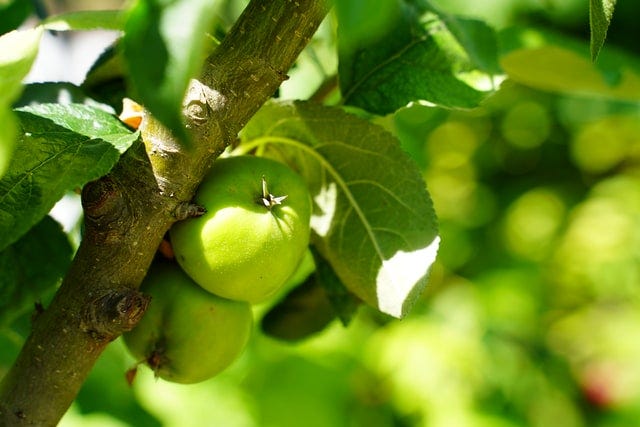
‘Farnesene’ refers to a group of six sesquiterpenes, at least three of which occur in cannabis terpene results I’ve seen (β-Farnesene, cis-β-Farnesene, and α-Farnesene). Like many of the terpenes that represent a large number of isomers, α-Farnesene and β-Farnesene are found in different sources and can have slightly different properties. α-Farnesene is responsible for that characteristic green apple smell and contributes to the brown spots indicating bruising of the fruit. β-Farnesene is found in basil and cardamom.
There’s a company, Amyris, that is dedicated to the production of farnesene through a fermentation process, they specifically produce trans-β-Farnesene. Their website boasts that farnesene has a versatile and useful chemical structure for a broad range of applications — from materials science, adhesives, and crop protection to vitamins. Farnesene is also being studied for other possible advances in materials science, and more synthesis methods for farnesene are being evaluated regularly.
Obviously, farnesene is some pretty handy stuff, and that means that it appears in a wide variety of patents and patent applications that go beyond the normal cannabis strain applications. It’s included in a copolymer for golf balls. Like many other terpenes, it is included in patent applications for sweeteners. Possibly harnessing some of its power as a terpene, it’s included in a lice control treatment. It’s pretty normal to see terpenes listed for hemp plants and cannabis plants, but I’m super interested in the cannabis ruderalis / Humulus lupulus high-yield cross called “Anew.”
Contributing to farnesene’s medical importance is the fact that farnesene is one of the terpenes in black pepper (Piper nigrum). Because of black pepper’s esteemed history of medicinal uses, this interest isn’t unfounded!
Sweet-smelling farnesene in its many forms features in many different strains of cannabis. It’s always best to determine what contains farnesene by looking at lab results from a reliable lab, but if that information isn’t available, strains such as Sundae Driver have had high alpha-farnesene, and strains like pineapple have high amounts of beta-farnesene.
Boiling Point: α-Farnesene at 503 °F, β-Farnesene at 523.4 ° F, and
Other Sources: Green apples, ginger, basil, bergamot, turmeric, ginger, olives, chamomile, mandarin oranges.
Scents: Green, floral, herbal, sweet, warm, woody, gin, citrus.
Flavors: Herbal, green, woody, vegetable, floral.
Article Sources:
https://www.sciencedirect.com/topics/medicine-and-dentistry/farnesene
www.thegoodscentscompany.com/data/rw1044061.html
https://shop.perfumersapprentice.com/p-8513-farnesene.aspx
https://www.verdesfoundation.org/terpenes/farnesene/
Originally published at https://oregoncannabisgazette.com.