Gluten-Free Labeling On Cannabis Edibles is Unregulated
It doesn’t mean what you think it means.
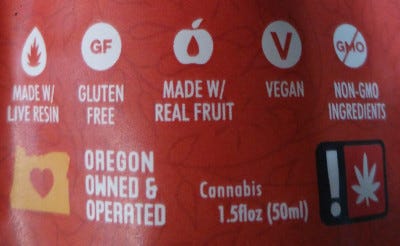
With no FDA regulation, that label doesn’t mean what you think it means.
I have Celiac Disease which means that gluten-free labeling standards aren’t actually stringent enough for me. United States labeling laws allow for a product to have up to 20 ppm which means that for people who are extremely sensitive to gluten, gluten-free isn’t actually gluten-free enough.
I often take the risk anyway, because I’m kind of a jerk to myself.
I’ve been seeing a lot of edibles with the “GF” symbol that indicates they are gluten-free.
It made me wonder, since cannabis is federally illegal and the FDA regulates gluten-free labeling: what does that really mean?
What is Gluten?
Gluten is a family of storage proteins found mainly in wheat, rye, and barley.
Gluten is what gives baked goods their structure, and it is the manipulation of gluten that makes certain breads and other baked goods light and airy. I like to point out to people that gluten is what makes a bagel a bagel (and when I’m asked what food I miss since I’ve been gluten free for 19 years, I say it’s bagels — I still haven’t had a gluten free one that is just right).
What is Celiac Disease?
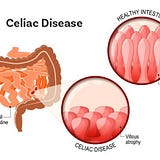
Around 3 million people in the United States have Celiac Disease which is an autoimmune disorder. This disorder means that the immune system mounts a response to gluten, and attacks it in the small intestine. The immune response damages the villi (celia) within the small intestine that help pull nutrients from food. The more damage the villi sustain, the less nutrition can be absorbed from food.
When I was diagnosed with Celiac, I was 20 pounds underweight and delirious from dehydration. If Celiac goes untreated, it can lead to other, more serious auto immune disorders.
Who Regulates Gluten-Free Labeling?
In the United States, the FDA is the organization that regulates gluten-Free labeling. Labeling a product gluten-free isn’t required: there are products that are gluten-free that don’t carry the label.
What are the United States Gluten-Free Labeling Standards?
The FDA’s standards for gluten-free labeling are:
- The product has less than 20 ppm of unavoidable gluten.
AND
- Does not contain an ingredient that is any type of wheat, rye, barley, or crossbreeds of these grains
- Does not contain an ingredient derived from these grains and that has not been processed to remove gluten, or
- Does not contain an ingredient derived from these grains that has been processed to remove gluten, if it results in the food containing 20 or more parts per million (ppm) gluten
Which, since I get sick at even teeny, tiny amounts of gluten, isn’t stringent enough for me.
That doesn’t mean I can’t eat things that are labeled gluten-free, it just means that I spend a lot of time emailing and calling manufacturers to research.
What Does That Mean For Gluten-Free Cannabis Labeling?
Gluten-free labeling has a lot of issues as it is for those with Celiac, but it gets even worse when it comes to edibles.
Since the FDA is a federal authority, the ‘Gluten-Free” labeling on cannabis edibles is entirely unregulated. There are no regulations and checks in place to ensure that products that contain THC or CBD are gluten-free. Since these markets are unregulated, there’s no way to be certain they adhere to even the FDA guidelines.
If you’re wondering if your THC edible or CBD edible is gluten-free because the label says so, the answer is, of course: it’s complicated.
If you are maintaining a gluten-free diet and want to consume cannabis in edibles, the only way to be guaranteed safe in doing so is to make the edibles yourself. Otherwise, you risk your health — do so on a manufacturer you trust.
Good luck! I will include some of my favorite gluten-free recipes for cannabis in the coming weeks (including gummies!)
Article Sources:
https://www.fda.gov/consumers/consumer-updates/gluten-free-means-what-it-says