How to Make Cannabis Labeling Work for You
Appropriate labeling will be key to bringing the power of cannabis to the consumer, but it’s currently nowhere close to everything the…
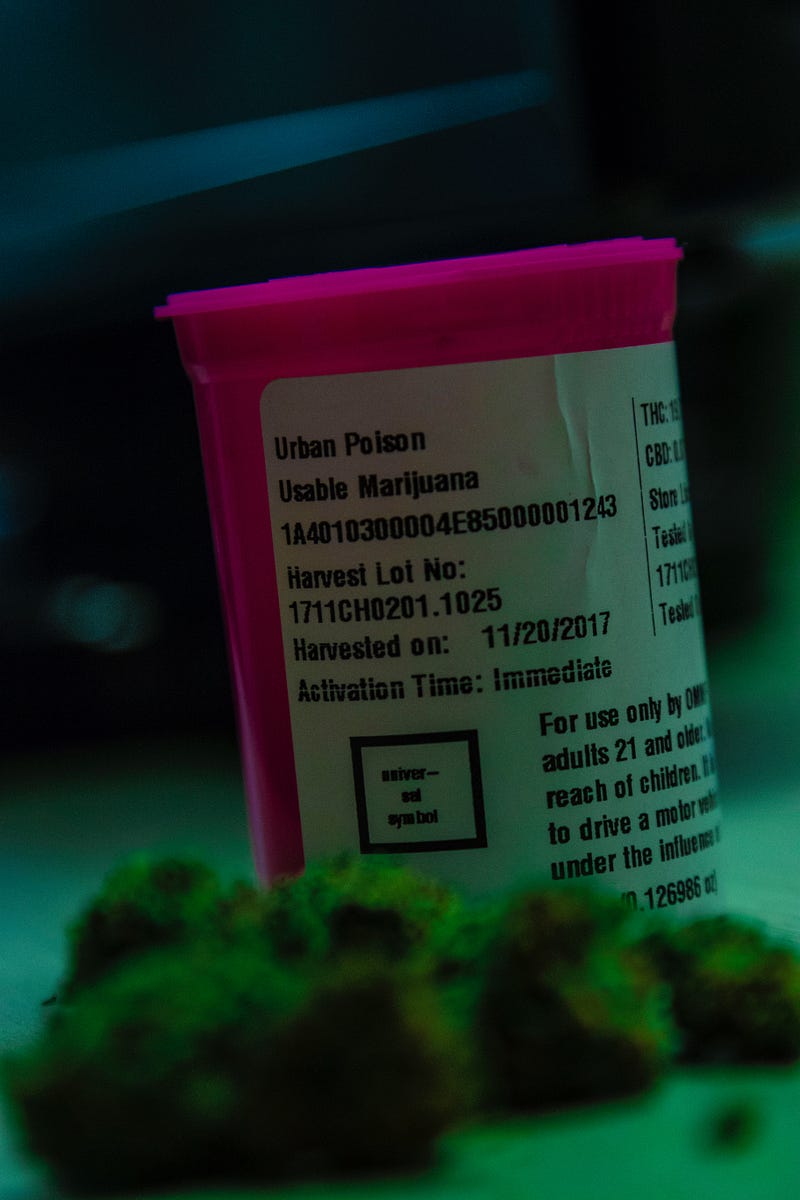
Appropriate labeling will be key to bringing the power of cannabis to the consumer, but it’s currently nowhere close to everything the industry could offer. Most of the still-new industry seems philosophically unready to self-police in order to voluntarily make its labels more meaningful.
The best way to make labeling work for you in its current state, is understand its weaknesses.
As cannabis is still illegal on the federal level, there are no federally-mandated labeling laws that the industry has to follow. Regulations vary in complexity of a few lines covering basic information on a select number of products, to pages of regulations broken out by product type. Even the symbol used to warn of THC contents can vary from state to state.
The responsibility for labeling can also be difficult to navigate, which makes it difficult for a savvy consumer to understand who should be supplying them with the information they need to make informed choices.
Cannabis flower introduces an exceptionally tricky area when it comes to testing and reporting of the chemical compounds it contains. Not only are strain names inconsistent across farmers and few of them indicate true properties of the plant, but outdoor grows can be subject to a variety of factors that can change its properties (much like terroirs for wine).
Some labeling laws have expanded to include strain names, in an attempt to control any possibly messaging to children, taking aim at popular strain names such as “Do Si Dos” and “Candyland.” Such naming is illegal in Oregon, but it only takes a quick perusal of the search results for any local dispensary’s menu, and it becomes obvious that the rule in its current state is unenforcable. Often, it’s easy to see where many of the labels that are printed for the product are missing information. A review of the labels I have journaled shows that many labels are missing key elements of information required by the local law. However, there does not seem to be any data mining of METRC or other state-mandated reporting systems to ensure compliance, or a cohesive enough audit program to catch these rogue instances, except through consumer reporting. Who is going to report their favorite pot shop?
If you are seeking to get the most from your cannabis, you will need to make all of the information available work for you.
If terpene and cannabinoid content aren’t available, ask if they will be. Ask about the parental strains. Look for indicators that the bud you are looking at might work for you (I know that purpley bud normally helps me with a lot of physical and gut pain, and your mileage might vary on that!). If you are looking for CBD vs. THC, oftentimes the label will include that. Use harvest dates, especially on outdoor crops, to determine overall plant health. Look carefully at the bud to see how it’s been manicured. Read up on farms when you can to see what types of grows they do, and what their popular strains are and why.
Labeling rules and their implementation add to the challenges faced by the consumers needing a consistent experience for their needs (be they medical, spiritual, recreational, or otherwise). Few label rules even require the amount of CBD, much less include other key terpenes or cannabinoids. It is not currently in the interest of the industry to go ‘above and beyond’ in the matters of reporting, either, as talking to public-facing industry representatives places one in a strange pass-the-buck exercise. Producers believe it should be retailers that share the information, and retailers claim it’s available should you ask, but then amazingly the information is inaccessible or out of date.
The biggest thing that cannabis consumers can do is pressure those in the industry to begin to go above and beyond current labeling laws.
When I was talking to a local farm, they expressed skepticism that cannabis users cared about information regarding terpenes and cannabinoids, and I told him emphatically we do. At which point, he told me to talk to the dispensary. But, while I had his ear, I advocated hard for labeling information, explaining the importance of knowing the profiles of the plants we ingest, and how I felt that a lot of the current trends I was seeing indicated an overall consumer interest.
I believe as cannabis users seek a healthier existence with cannabis in their lives, they will be seeking increasing amounts of information about their product. Currently many producers don’t even have websites that they could use to distribute the information, and many retailers rely on marketing platforms and other profit seeking entities to make information available to their customers.