Let’s Learn About Cannabis Storage!
Cannabis Storage is an important and under researched topic!
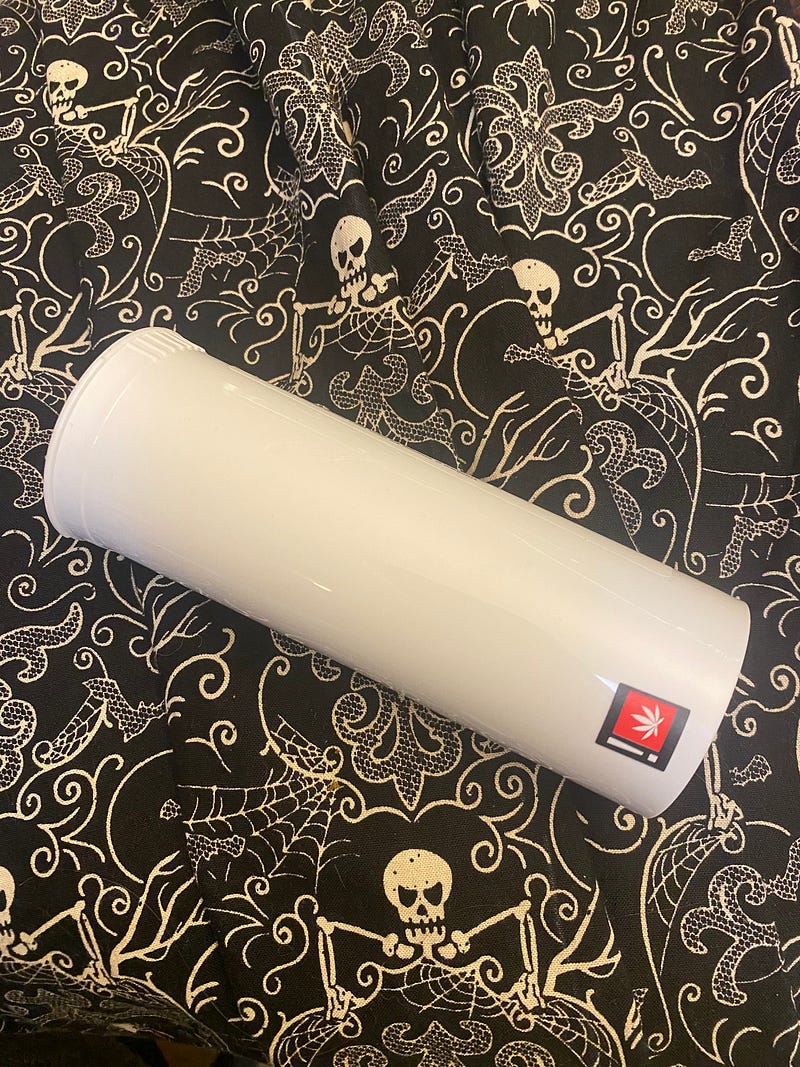
I’ve written a lot about how prohibition stunted cannabis research and science. We’ve discussed quite a few areas that remain severely under-researched. While researchers are gaining access to our favorite plant and exploring questions we’ve long had, we still have a lot of questions around storage and preservation — especially at the consumer level.
This is really disappointing, given the known volatility of things like terpenes and cannabinoids — it’s important for us to be able to store these beautiful flowers!
The Initial Studies
A key paper in the field is one that was written in 1976 by J. W. Fairbairn, J. A. Liebmann, and M. G. Rowan, from London. For their study, they used fine ground and coarse ground flower from cannabis plants they grew in addition to resin (hash). They were looking specifically for information about light, as they had found prior research in the area lacking. This might explain why, unfortunately, while they tracked what happened to cannabinoids in light vs. dark at room temperature with a refrigerated control for the flower — they did not subject a refrigerated control to light. This which makes their results regarding the deleterious effect of light on cannabis feel incomplete, as there is definite knowledge gap about storing cannabis at temperatures warmer than freezing.
The other thing I notice about the 1976 study is that it was performed on ground cannabis, and its data tables demonstrate larger loss at a finer grind. This makes intrinsic sense — in order to test THC potency, it’s required that to homogenize (grind up) a sample.
Other studies concerned with the aging of resin / hash products found that the outermost portion of the product had the greatest loss, and it’s possible that the same pattern would be found in flower. These studies don’t leave the flower intact — which doesn’t make it a great comparison to the sorts of storage conditions that, say, I have. When further examining Fairbairn’s data, the first point of information is recorded at week 31. That’s nearly eight months of elapsed time!
I can assure you cannabis doesn’t last that long here!
More Recent Explorations
In a 2019 study, “The role of time and storage conditions on the composition of hashish and marijuana samples: A four-year study,” by Luca Zamengo et al., seems largely inspired by the Fairbairn research. It examines different storage methods and their impact on cannabis. Taking place over four years, the study had controls stored at lower temperatures (which included freezing this time), but yet again neither was subjected to light.
In contrast to the Fairbairn study, this one found that the ground, sifted cannabis that was subjected to room temperature (whether in darkness or in light) fared far worse than cannabis held at cooler temperatures. The other interesting notation is that most of the THC had degraded from the flower product within 4 years.
It’s also important to note context with this one — the 2019 study was published in Forensic Science International, the focus of the 2019 study was in the creation of a mathematical model of cannabinoid degradation. In other words, the Italian study focused on using mutlivariate analysis to determine the age of ‘seized’ materials and weren’t interested in understanding the impact of storage methods on consumption.
Another paper in 2019 (Effects of long term storage on secondary metabolite profiles of cannabis resin by Karin Grafström, et al. ) almost seems like it might have the answer, but when digging into the results, it’s explained that several samples had been accidentally exposed to air at month 8 of the experiment. This paper cites the research of others regarding the degradation of THC, and was more focused on our friends — terpenes. In the case of terpenes the key was, in the least, an airtight seal was the most important variable in their lifespan. All of this research still leaves us with major questions about home storage methods for cannabis.
While research has found significant breakdown in THC when it was exposed to UV light, that conclusion is tempered by the fact that flower isn’t just a suspension of extracted THC, and all combinations of light, airtight seals, and temperatures haven’t fully been researched.
As we all know, cannabis flower so much more than just a bunch of component chemicals.!
What Can We Consumers Learn?
There’s also tendency on the part of manufacturers and marketers to overstate what the research says, which is pretty common when it comes to cannabis.
It really comes down to this. We know that trichomes are delicate, and everything in them is temperature sensitive. Freezing them makes them extremely brittle. If you like your trichomes on your bud and like your bud tasting awesome — freezing as a long-term solution is probably sub-optimal. We also know that long term exposure to light is bad, so while a brief stint of time in a clear glass jar may not be terrible for a brief window of time, it should be brief. We also know that flower shouldn’t dry out (remember the days before boveda, when we had to put a lemon peel in with the bud?).
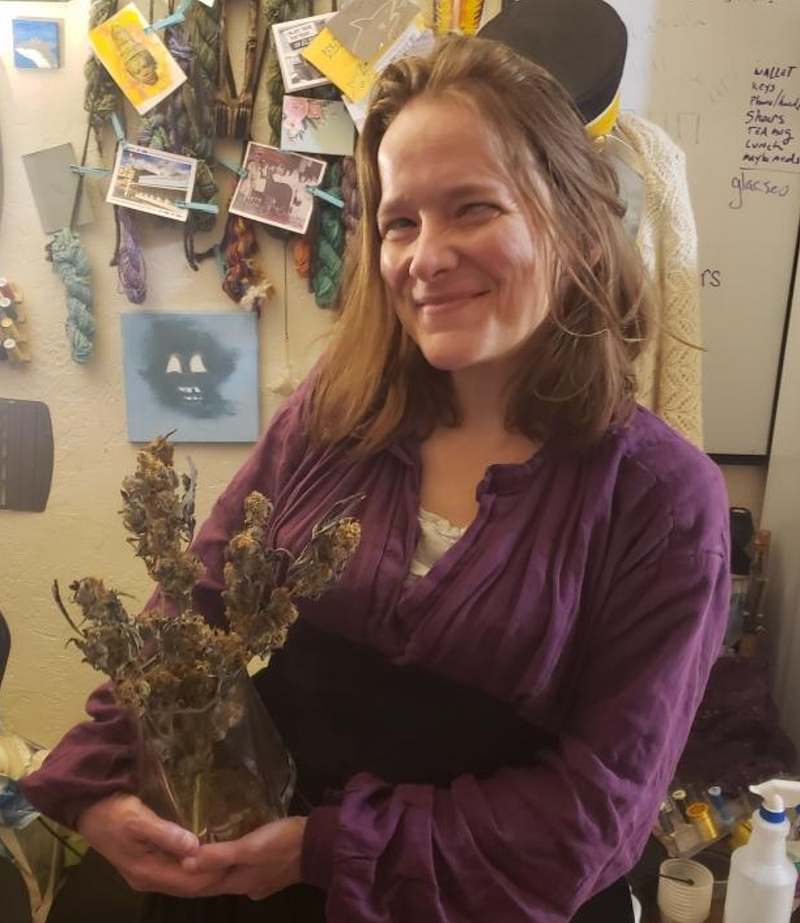
I wish this was the part where I could tell you I use something super fancy to store my cannabis but honestly, darling readers, that’s not in the budget. I have freezer bags that have moisture packs, and I store those wrapped in paper bags in my refrigerator. Every few days, I take some out as needed. The best solution for you will take into account how much cannabis you tend to have on hand and for how long, how many ‘staging’ areas you have for it, how much you consume, and how precise you want to be in its preservation.
Article Sources / Further Reading
The stability of cannabis and its preparations on storage Fairbairn et al: https://academic.oup.com/jpp/article-abstract/28/1/1/6196321?redirectedFrom=fulltext&login=false
Stability of Cannabis sativa L. samples and their extracts, on prolonged storage in Delhi: https://www.unodc.org/unodc/en/data-and-analysis/bulletin/bulletin_1978-01-01_4_page007.html
The role of time and storage conditions on the composition of hashish and marijuana samples: A four-year study: Luca Zamengo, Chiara Bettin, Denis Badocco, Valerio Di Marco, Giorgia Miolo , Giampietro Frison :https://pubmed.ncbi.nlm.nih.gov/30901710/
Effects of long term storage on secondary metabolite profiles of cannabis resin. 2019: https://pubmed.ncbi.nlm.nih.gov/31202146/