The Endocannabinoid System: Mysterious and Important.
Did I Just Make a Severance Joke? You Bet I did.
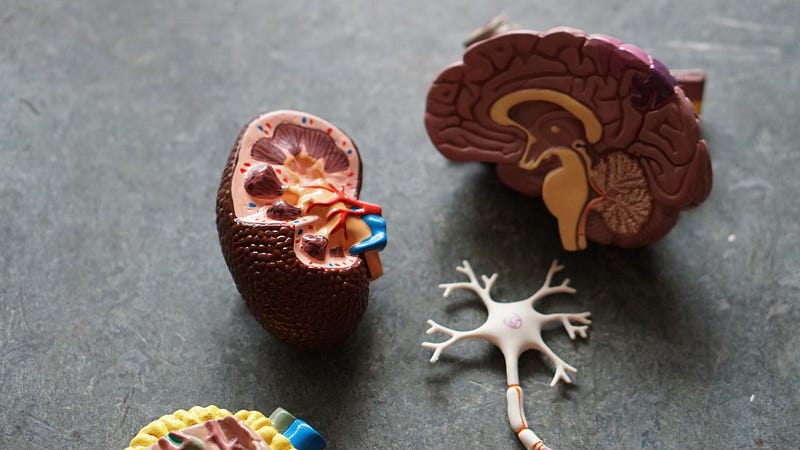
There’s a lot of focus on cannabis in conversations about cannabis (and rightfully so). Just as beauty is in the eye of the beholder, a cannabis experience is similarly subjective. Our bodies are complex electrochemical machines that have a panoply of possible actions and interactions. Let’s explore an important facet of our experiences — the mysterious and important endocannabinoid system.
What’s in a name, anyway?
The word “endo” comes from endogenous, meaning something that your body naturally produces. And cannabinoid is derived from ‘cannabis’ and refers to compounds that are most frequently found in the cannabis plant. Endocannabinoids are molecules that work similarly to cannabinoids — but they are produced by your body.
These endocannabinoids are important enough that there is a complex neuromodulatory system that uses them extensively. This system is made up of the endocannabinoids, the enzymes that break them down, and the receptors that use them. The endocannabinoid system (ECS) was discovered in 1990 after discovery and identification of one of the receptors ( it happened to be the CB1 receptor, which we’ll talk about a bit later).
The Endogenous Cannabinoids: Anandamide and 2-AG
Basically, the endogenous cannabinoids are neurotransmitters. Neurotransmitters act as chemical messengers that send signals between nerve cells. Anandamide (AEA or arachidonoyl ethanolamide) and 2-archidonoyl glyerol (2-AG) are the endocannabinoids that have been identified. Unlike other neurotransmitters, endocannabinoids are made and released into extracellular spaces on demand (instead of being created and then stored in synaptic vesicles to be released).
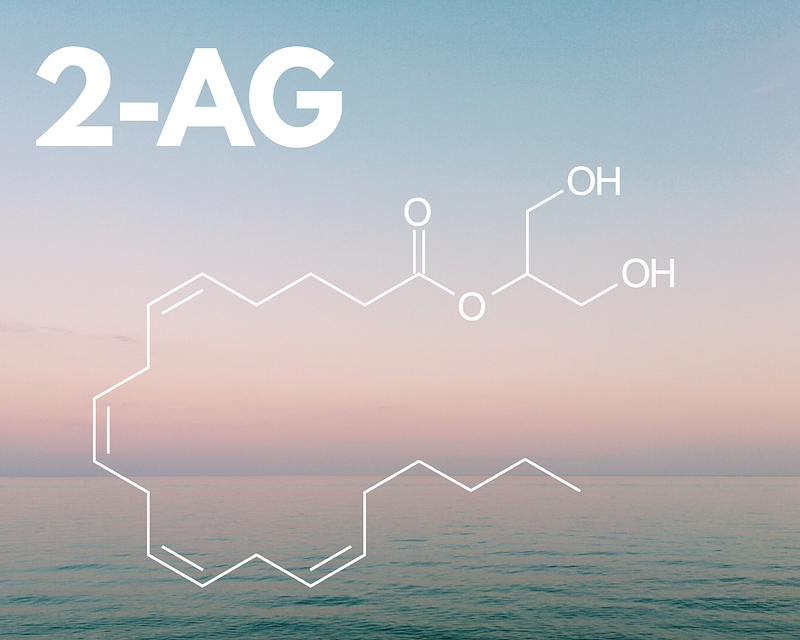
2-AG is found with relative frequency in the central nervous system. Its synthesis and creation is calcium-dependent. 2-AG acts as an agonist of both of the ECS’s receptors, but its affinity for the cannabinoid receptors wasn’t identified until 1994.

Anandamide, also known as ‘the bliss molecule,’ was first discovered in 1992. It’s associated with analgesic effects and (obviously) euphoria. The amount of anandamide released dictates the number and type of receptors activated. Anandamide also affects the connections to the cells that affect memory. It’s speculated that it can impact the perception of psychological pain in addition to it’s ability to modulate physical perceptions of pain. Anandamide binds with a strong affinity to CB1 receptors.
The Two Receptors: CB1 and CB2
CB1 receptors are mainly found in the brain and central nervous system (CNS) but they can also be found in other areas of the body such as vascular tissue and smooth muscle tissue. The action of the CB1 receptor is described as ‘neuromodulatory’ in that it modulates the action of other neurotransmitters. CB1 receptors’ prevalence in the brain help explain how cannabinoids might impact things like memory, mood, and pain. CB1 receptors are primarily associated with analgestic and psychoactive effects associated with cannabis. In addition to being found in the CNS and brain, CB1 receptors have been found in reproductive organs, the vascular system, and even muscles!
Meanwhile, CB2 receptors are mostly found in the peripheral nervous system and immune cells in addition to the skin, bones, and spleen. There’s also a high concentration of them in the GI system. Because of this, they are largely associated with immunomodulatory and anti-inflammatory effects. Because of the CB2 receptors ability to modulate neuroinflammation it is considered to be neuroprotective.
The Enzymes
After the endocannabinoids have carried out their task, they need to be cleaned up, and that’s where the enzymes come in. Three hydrolytic enzymes, monoacylglycerol lipase (MGL) and alpha/beta domain hydrolases 6 and 12 (ABHD6 and 12) are responsible for breaking down 2-AG while fatty acid amide hydrolase (FAAH) breaks down anandamide.
Mysterious
There are a lot of reasons that contribute to the fact that we actually don’t know the way THC and CBD work, and we only know part of how it interacts with the ECS. The two reasons that jump out at me in particular are prohibition, and the fact we still don’t fully understand the brain! After all, the ECS was only discovered in the past few decades.
What is known is that THC binds with, and is a partial agonist, at both CB1 and CB2. Meanwhile CBD doesn’t directly interact the the receptors, instead acting indirectly. It’s believed, for instance, that CBD is able to change the shape of the CB1 receptor and prevent THC from binding with it.
Important

What Bodily Functions Might the Endocannabinoid System Regulate?
The recent discovery of the endocannabinoid system means there’s still much to learn.
The ECS has been linked to the following processes:
- Mood Regulation
- Sleep
- Metabolism
- Appetite and digestion
- Liver function
- Stress Mitigation
- Chronic pain
- Inflammation Control
- Learning and memory
- Motor control
- Skin and nerve function
- Reproductive system function
- Cardiovascular system function
- Bone growth
All these functions contribute to homeostasis — and many experts believe that the ECS’s central role is to help the body maintain homeostasis (which is just a fancy word for balance in a biological system). For example, if an outside force, such as a fever or an injury is introduced, it throws off your body’s homeostasis. Your endocannabinoid system kicks in, using its power to rally all of the above functions in to restore balance.
Invest in Your ECS
There are ways to care for your endocannabinoid system, just like you care for your skin, bones, and mental health. One way to care for your ECS to ensure you have enough fatty omega acids in your diet. Even coffee and chocolate have been found to help boost ECS function.
Another way to care for your ECS is through exercise. In fact, there’s research that suggests that the ‘runner’s high’ is due to endocannabinoids. It’s widely believed that exercise can be an important way to assist the body in achieving or maintaining balance.
It’s important to note that overstimulation of the CB1 receptor is perceived as ‘tolerance’. This is why tolerance breaks are sometimes necessary after long periods of overstimulation. Even tolerance breaks as brief as 48 hours can be effective helping to reset the CB1 receptor.
We’re learning more and more about the ECS, but we still have a long way to go in understanding this mysterious and important system. Because it’s such a key part of the cannabis experience and still is so misunderstood it goes a long way toward explaining why there is so much variance in cannabis experiences.
Sources
https://www.ncbi.nlm.nih.gov/pmc/articles/PMC4789136/
https://www.sciencedirect.com/science/article/pii/B9780128047910000033
https://pubmed.ncbi.nlm.nih.gov/17245363/
https://www.jyi.org/2018-june/2018/6/1/the-endocannabinoid-system-our-universal-regulator