Three Powerful Lessons from My #MeToo experience
Lesson One: If you get sexually harassed at a company, report it, and they don’t do anything — don’t expect they will change at any point…
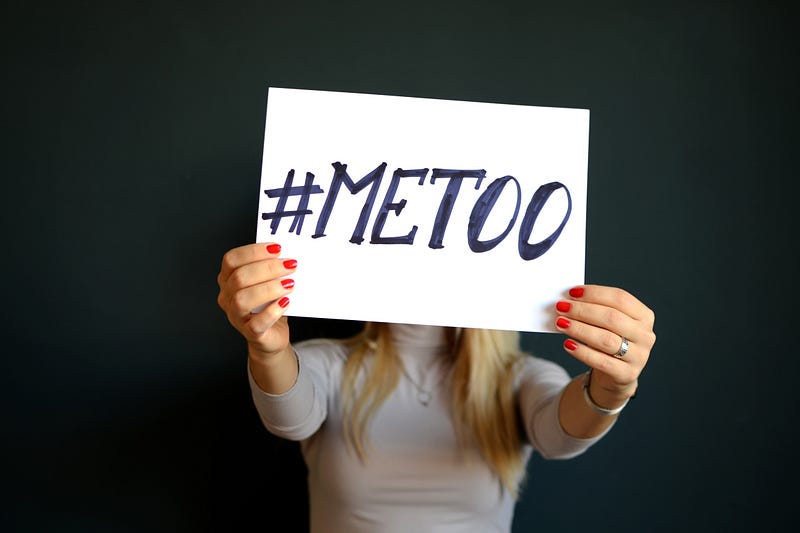
Three Powerful Lessons from My #MeToo Experience
The quote that really helped guide me through the entire experience was said by none other than Jean Luc Picard — “It is possible to commit no mistakes and still lose. That is not a weakness. That is life.”
Lesson One: If you get sexually harassed at a company, report it, and they don’t do anything — don’t expect they will change at any point in the future.
For as much as one could predict the terrible behavior of other human beings, I had so many opportunities to see my #metoo moment coming. Casual misogyny defined the university hospital system’s atmosphere when I worked there the first time. It was strange chance that aligned that brought me back to the same institution. I think I also wanted to believe in the best in people.
I really wanted to believe that they had changed, just like I always had in every abusive relationship I’ve had. After all, believing that people and institutions can change is a way for us to believe in our own hopes for ourselves. Right?
In this abusive relationship, the break up would cause me to leave the state to ensure my harasser (the data governance director) and his enablers (one a VP of IT) would no longer have access to any of my current information. Since my employer held many state (and some intra state) contracts, it was also the only way to ensure they got as few of my tax dollars as possible.
When the #metoo movement happened, I hoped it would mean something other than the sound of everyone affirming their realization that things aren’t really going to change, and were never really equal. Since I worked in a male dominated field (healthcare IT), I’ve endured a lot of harassment over the years. Even I was naive enough to think that the one that happened contemporary with the overall #metoo movement would have a different outcome.
Lesson Two: Keep track of when you’ve reported the behavior to your management through your email, and through meeting agendas, to ensure you have a digital trail — and bcc your personal email on these items.
There were a lot of things to differentiate this streak of harassment from others I had endured. But the factor that made it so that at least HR took it seriously when I reported it was the digital trail harassment creates. A few years back, when I first worked for this company and a guy grabbed my tits in the server room in front of three other men, there was no trail — it was me vs. them — their silence during my assault told me enough. This time, I had proof that he was stalking me via social media, that he was sending me inappropriate amounts of texts at all hours to my personal phone, and I had proof I had repeatedly asked him to stop. I had proof I had told my direct supervisor, the VP of IT — I even had proof that he confirmed it was inappropriate behavior, and that he would do something about it. Compare that to 13 years prior — when I reported to my boss at the time (a director) that a peer of his had shoved his hand up my skirt and followed me to my apartment, he told me he was powerless to do anything as it would spoil his relationship with the department, and didn’t bother to write it down.
Lesson Three: HR is not your friend.
HR is there to protect the company from being sued. NOthing proved that more than when the self-proclaimed feminist HR Rep went through my personal texts, and claimed that perhaps some of the harassment was due the fact I was so ‘familiar and casual’ with someone I had to work 15 hours a week with. She cited the fact that I used the word fuck in my text messages. I disagreed that such language should open me up to having to see pictures of him in his Texas briefs, or allow him to ask me about how enemas made me feel. After all, I pointed out using such ‘technical terms’ like fuck was common among the group I was working with, and I had the emails to prove it.
The lesson is, in the end, HR’s job is reduce you to a pile of statistics: the likelihood that you will sue vs. how much you could possibly get — and then drive those numbers to be as small as possible. To them, it came down to the fact that he was just a creep, and not stupid — he had SHOWN me the picture of him in his briefs on his iPhone, not sent it to me. He had talked to me in a one on one meeting about enemas. In other words, he was experienced enough to know how to get away with it.