What I Do When Hope Hurts
Meditating on Tarot and Watching King of The Hill Helped Me Recognize a Symptom of c-PTSD. They also help me combat it.
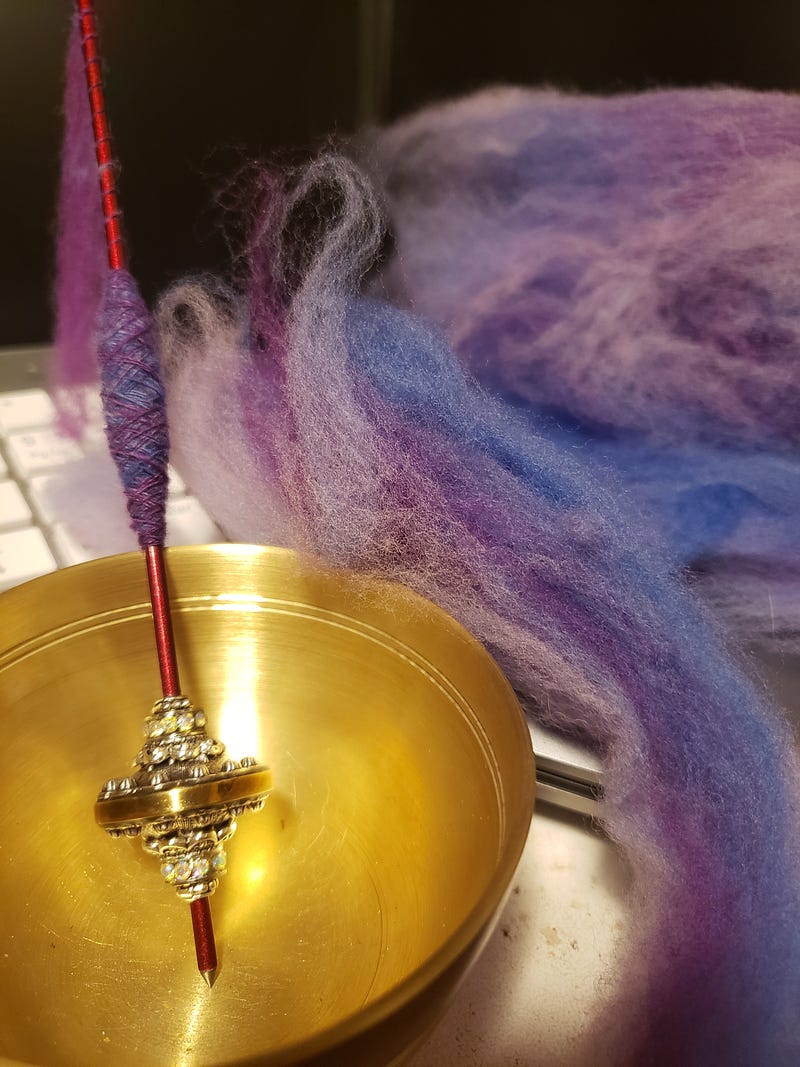
I have a difficult relationship with hope.
I know that might sound crazy.
But I also know I’m not the only one.
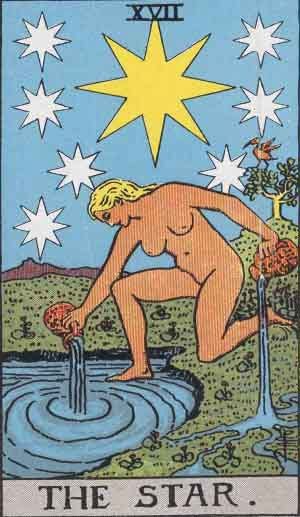
Nothing made the fact I’m not alone in this troubled relationship with hope clearer than when I was pondering how to approach my piece on The Star, the card in tarot that is traditionally associated with the concept of hope. In Pamela Colman Smith’s famous version of the card, a beautiful, youthful woman pours water onto the sea and land. Many tarot teachers and references will say that when The Star appears in the reading, it will serve as a source of inspiration and hope. While I could find myself studying many cards in the tarot for hours, often I will quickly shuffle past The Star, glazing over it. I couldn’t quite put together why. Later, when reading the guidebook for the Light Seer’s Tarot and going over the exercises, the reason started to become clearer still.
Even later, when watching King of the Hill, all of the pieces of the puzzle fell near enough to each other I could start to put it together.
In the 111th episode of King of the Hill, ‘Torch Song Hillogy,’ Hank Hill grapples with his long-standing belief that moments of happiness and joy will ultimately lead to his own misery. He holds this belief, because of what happened during a state championship football game he played in high school. Hank scored the winning touchdown, clinching his team’s bid for state, and then he ‘engaged in the worst kind of useless showboating’ by performing an end-zone touchdown dance to celebrate the touchdown. On the very next play, Hank’s ankle was broken.
Hank believes, and had for many years, that “God was punishing me for being prideful. He didn’t give me a fatal heart attack because he wanted me to sell propane, but he made his point.”
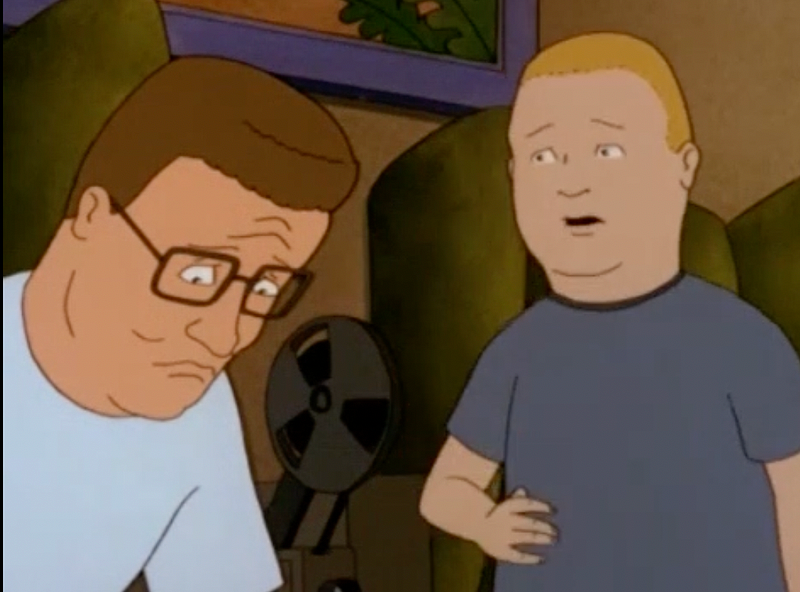
Bobby, his son, was aghast. “That’s crazy! God wasn’t punishing you! It was just a coincidence!” he responded. And then he observed, “Is this why you’re so uptight all the time, because you think something bad is going to happen because you act happy?”
While I don’t feel exactly as Hank does, it’s a very good illustration of how the seed planted by a traumatic incident can bloom into hopelessness, depression, and lack of joy. It’s just hard to see Hank as lacking joy once you’ve heard him talk about the Wagner Char-King Imperial.
I’ll even go a step farther than our propanery assistant manager and say that not only am I uptight at times because I’m afraid of happiness, but for parts of my trauma-brain, this feeling also has bloomed into a full-on dread of feeling hope. There are times when it’s so bad that if I feel it just a little, my inner critic swoops in to tell me how stupid it is.
On a psychological level, it’s because I was failed so much and so often that part of me not only gave up, but felt so abandoned and frustrated by it all, that she despises whenever she feels hope. Because that catastrophizing part of myself feels that hope inevitably leads to failure, disappointment, and abandonment — because it had so many times before.
And when that part of me is able to be very honest about why and how that is, it’s because my inability to cheer myself on adversely affected my own performance.
That’s right — my inability to healthfully process hope worked against me.
More than once.
I bet I’m not alone in that, either.
In fact, I know I’m not. In a series of inhumane experiments, Martin Seligman exposed animals to painful situations beyond their control and found that after a while, they gave up escaping. He called this ‘learned helplessness.’
My childhood was a painful situation beyond my control. For a while, and sometimes even now: I give up, and that’s when hope hurts. Because I know what it should feel like and I want to feel it while simultaneously despising myself for thinking I deserve it.
When hope hurts, I’m not in a great headspace. I barely feel capable of surviving, much less thriving. I have, however, found things I can do when hope hurts to make it through some pretty hopeless feeling moments.
Be Creative / Make Things
One of the many reasons I am nearly always in the process of making something is that it gives me something to look forward to — and that something is often largely in my control. The act of making things helps to ground me and make me feel empowered (even though the creative process can sometimes unleash that inner critic!), because it makes my ability to impact my environment and experience incontrovertible. While I can go on and on about my regrets of when I’ve hidden myself from the world, there are very few I have about making things (and most have to do with my personal mistakes on a project, or a failure to start a particular skill early enough!). It doesn’t just stop with my love of the textile arts — making music, making my space better, thinking about a new project, engaging with a new skill — all of these are ways for me to create a moments in my reality that I can look forward to being in.
Humor: Gallows, Absurdist, and Otherwise.
Some of the funniest, snarkiest remarks I’ve made are about some supremely dark shit that I went through. The ability to make that joke can be transformative.
You can’t joke about this stuff to everyone. Please, do not start joking about childhood trauma with someone at your grocery store. But do allow yourself to laugh at the absurdity that life can be in the face of the trauma you’ve faced before.
Finding just any reason to laugh will help. It might not invite hope in, but it can make hopelessness feel less lonely.
Connect with Stories
A lot of my tarot work is connecting with the stories in the cards, and that has brought a lot of insight to my inner work. I think at the core of my connection with tarot is my connection with storytelling and stories. When hope is an emotion I really don’t want to feel much of, I turn to stories to remind myself of my connection to this human experience. They remind me that everything is temporary, and changes that seem subtle and tiny can have immense ripple effects.
Meditation: I am not my feelings and thoughts; they are just like clouds in the sky
Everyone talks about how great meditation is, and the reason I think it’s great, too is it helps me to remember that I am not my thoughts or feelings, and that includes hopelessness. It also includes any need for hope. Or desire for anything at all. Feelings, just like thoughts, are just momentary ripples in the water of who I am.

When I feel like hope hurts, mindfulness meditiation is not the meditation tool I use. I find it can almost be more hurtful and might have me verge on a panic attack. Instead I try to use mantra meditation with some nonsense word so that my hyper-vigilant, overly-stressed and catastrophizing mind will have something to do, while I can get my bearings and remember who I am among all those thoughts, feelings, and experiences.
Stimulate My Mirror Neurons
Ugh this is weird, but I’m going to share it. When I feel particularly disconnected from hope and joy, I watch videos where people are joyous, feel hopeful, or talk about that. In addition to allowing myself to cry as a release while watching these videos, I believe what’s happening is that mirror neurons help me re-regulate my emotions.
What are mirror neurons? Briefly, they are a brain cell that reacts both when an action is performed AND when it is observed. They have a large role to play in empathy in addition to being impacted by trauma. I also think they are important to trauma recovery. I feel that in addition to showing me how hope is possible by showing me other people experiencing it, that watching these sorts of hopeful, positive videos also helps me to feel vicarious hope.
Puppy videos also count.
Recognize when Media Re-Traumatizes Me and Disengage if Possible
The world is a rough place to be right now, and just like some things you watch, read, and engage with can heal, others can re-traumatize. When hope hurts and I feel like I might have to resign myself to a life of hopelessness, I try to disengage with the avoidable negative and most often this means the news.
Unfortunately we find ourselves in a time where bad news and hatred get more clicks than good news and lifting people up. If I don’t want to live my life that way, it’s important that I not give things like that space enough to allow me to fester in the futility of it all. There’s money to be made in emotional manipulation, and so much of the media that we consume is aimed for the easier-to-hit emotions.
Think and Write about Things I Love
This is my own twist on the gratitude exercises — I write about the things I love. Even when things are bleak and I’m feeling hopeless there are still topics I love to engage with and write about. There’s almost always someone making something I’m excited to share, or maybe I’ve seen a piece of media I really adore and I want to explore it (exploring the same story again and again is yet another personality quirk of the traumatized and anxious).
It’s like allowing myself to feel passion and engage with things I love lets me reach into a past where I felt hope and feel it again. I write about a variety of topics, and it’s rare that I regret something I’ve written. Allowing myself the passion to research cannabis terpenes, write about tarot cards, or write in-depth comparisons of movies ultimately helps me.
I feel stronger when I lift up something I love.
In addition to being stories I can engage with, shows like King of the Hill and Twin Peaks (in addition to things like tarot decks) help me by also being things that I love.
It’s probably the way that Hank Hill feels about propane.